
Opinions expressed by Entrepreneur contributors are their own.
Key Takeaways
- Your next regular could live next door.
- Hospitality has to last through checkout.
- Technology should give teams less work.
A campaign targeting nearby residents brought 50 diners to a restaurant in Manhattan’s Meatpacking District on a rainy Monday night, says.
For Sam Bakhshandehpour, president of local merchants at Bilt, the evening illustrated an opportunity for restaurants facing rising costs and pressure to fill seats.
“No one’s traveling on a Monday night to go grab a meal,” he says.
Rather than trying to attract diners from across the city, Bilt targeted residents in nearby apartment buildings who wouldn’t have to travel far for dinner. The restaurant’s chef-founder was pleased with the results.
“We got 50 covers locally, came on a Monday night where it would’ve been a disaster of a night,” Bakhshandehpour recalls the founder saying.
The guests also spent more, on average, and joined the restaurant’s loyalty program, Bakhshandehpour says.
Bakhshandehpour spent six years helping lead José Andrés Group, most recently as CEO, before moving to Bilt. Years of running hospitality businesses had given him plenty of problems he wanted to solve.
“The costs are going higher, and our margins are getting squeezed every single day,” he says.
When Bilt founder Ankur Jain asked what restaurateurs needed help with, Bakhshandehpour answered, “How much time do you have?”
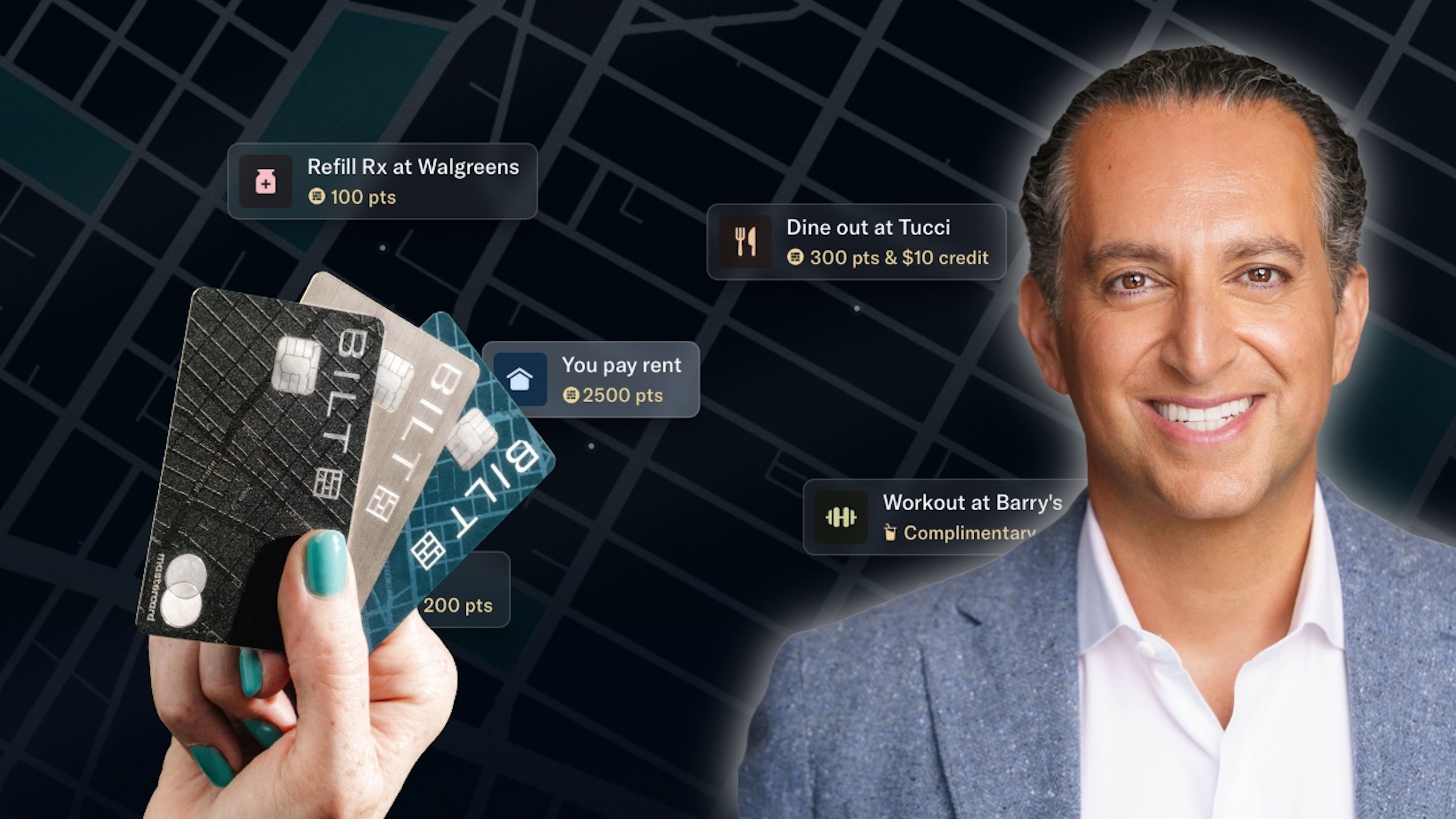
Bilt began by allowing residents to earn rewards on rent payments. That housing network created an opportunity to connect local businesses with the people moving into nearby homes. Bakhshandehpour says residents make important decisions within their first 30 days in a neighborhood.
“This is my dry cleaner. This is my pharmacy. This is my restaurant, my bar,” he says. “And they’re loyal to their local neighborhood.”
Restaurants once sought those introductions through flyers and menus slipped under apartment doors.
“That’s been digitized,” Bakhshandehpour says. “And that has been localized and personalized to you.”
On that rainy Monday, the campaign gave nearby residents a reason to try the restaurant. Their first visit gave the team a chance to earn the next one.
Hospitality made easier
A restaurant sends something to a table as a complimentary gesture. Then the guest finds it on the bill.
“I didn’t order this, and now you charged me for it,” Bakhshandehpour says.
“Thanks for that level of hospitality,” he adds sarcastically.
The restaurant intended to do something thoughtful. A missed instruction turned it into an awkward conversation.
Bakhshandehpour knows how many details restaurant teams have to carry from one person to another. A reservation request arrives by text. Someone needs to respond, pass it along and make sure the team is ready when the guest walks in.
Technology should help those details reach the people responsible for them.
“You’re able to focus on what you do best, and that’s deliver hospitality to your guests, not worry about the reservation book,” he says.
But every new tool can create another responsibility. As Bilt developed its use of AI agents, Jain set an expectation that Bakhshandehpour remembers clearly.
“This can’t be more work for the teams.”
An operator should be able to ask, “Who’s coming to my restaurant tonight?” in everyday language. Getting an answer shouldn’t require learning how the technology behind it works.
Bakhshandehpour sees that simplicity in a device his father already uses.
“My 84-year-old father sets up his iPhone in a matter of minutes,” he says. “It’s effortless.”
Restaurants also have existing systems they depend on. When I asked whether operators using Toast could connect to Bilt without replacing their point-of-sale platform, Bakhshandehpour said they could.
“We can integrate, you keep Toast,” he says.
To hear where the experience needs work, Bilt sends executives to different cities each quarter for gatherings called Close Friends. Members are invited to give candid feedback.
“They’re the ones who challenge us, they give us the straight talk,” Bakhshandehpour says.
For restaurant teams, the value comes through in the follow-through. The reservation is ready. The instructions reach the right employee. A dish sent as a gift arrives without a charge.
About Restaurant Influencers
Restaurant Influencers is brought to you by Toast, the powerful restaurant point-of-sale and management system that helps restaurants improve operations, increase sales and create a better guest experience. Toast — Powering Successful Restaurants. Learn more about Toast.
Restaurant Influencers is proud to have PepsiCo as a sponsor of this episode. Partnering with PepsiCo Foodservice helps restaurant operators drive sustainable growth through smarter digital experiences, AI-backed menu optimization, and tools designed to create more profitable online orders. Check out PepsiCo Foodservice
This article was originally published on entrepreneur